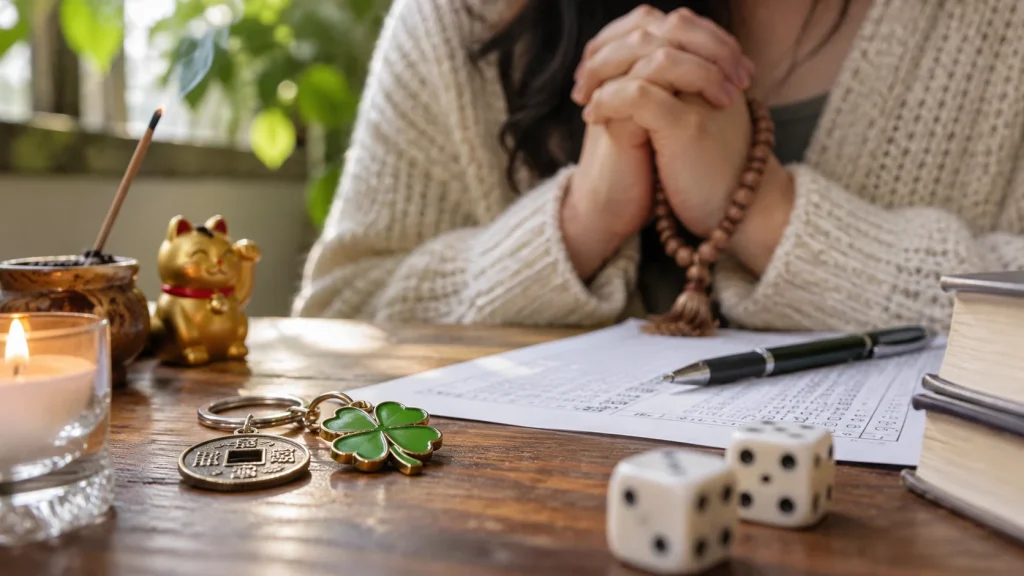
Before an exam, someone may carry a lucky pen. An athlete might wear the same shirt before each match. Others say a short prayer before an important event.
These habits share one idea: the hope that something familiar can bring good fortune.
People have used lucky charms, prayers, and personal rituals for centuries. Some traditions come from religious faith. Others grow from family customs or personal experience.
Their forms differ, but many help people face uncertain moments.
A small object may remind someone of a loved one. A prayer may bring peace before a hard choice. A familiar routine can help calm nerves when the outcome is unknown.
Yet feeling more confident does not mean controlling chance.
Psychologists study these beliefs to understand how people respond to uncertainty. They examine why the brain connects events, why rituals can reduce stress, and why some coincidences seem meaningful.
Games of chance offer one example. People may link a lucky number or a repeated action to a past result, even when no clear cause connects them.
The same thinking can appear in daily life.
Understanding the psychology of luck and superstition helps explain why these beliefs remain common and what they reveal about human behaviour.
Why People Believe In Lucky Charms And Superstitions
People seek patterns in the world around them. When two events happen close together, the brain often looks for a link.
Imagine a student who carries a small stone to an exam and earns a high grade. The student may credit the stone, even though weeks of study led to the result.
Psychologists call this illusory correlation. It occurs when people see a link between events that have no proven connection.
The same habit appears in games of chance. A player might recall a lucky number or a past result while viewing a game such as crash duel x slot. Yet previous outcomes do not predict future results when each round is independent.
Confirmation bias can make these beliefs stronger. People tend to recall events that support their views and overlook those that do not.
If a lucky charm seems to work three times, those moments may stand out. The many times it made no difference may fade from memory.
Still, charms can serve a real purpose. A familiar object may ease stress or remind someone to stay calm.
The key distinction is simple: a ritual may change how we feel without changing the odds of an event.
How Prayers And Rituals Help People Face Uncertainty
Prayer and personal rituals often bring comfort when life feels hard to predict. People may pray before surgery, light a candle for a loved one, or repeat a familiar phrase before an exam.
These actions can create a sense of calm and order.
A ritual gives the mind a clear task. Instead of dwelling on what might go wrong, a person can focus on a familiar sequence of words or actions.
Psychologists link this effect to emotional regulation, the process of managing feelings such as fear, stress, and worry.
Prayer can also provide a sense of connection. For religious people, it may express faith, gratitude, or trust in a higher power. Its meaning goes beyond the hope of receiving good luck.
Personal rituals work in a different way. An athlete may follow the same warm-up routine before each match. The routine can help them focus, even though it cannot guarantee victory.
The value of these practices lies in how they support the person, not in any proven power to control chance.
When people feel calmer, they may find it easier to think clearly and act with care.
The Difference Between Good Luck And The Illusion Of Control
People often feel safer when they believe they can shape an uncertain result. This belief can help them stay calm, but it can also distort how they judge chance.
Psychologists call this the illusion of control. It occurs when someone believes their actions affect an outcome that they cannot influence.
For example, a person may throw dice harder when hoping for a high number. Yet the force of the throw does not give them control over the result.
The same thinking can shape everyday beliefs. Someone might wear a lucky bracelet to a job interview and later credit it for getting hired.
The bracelet may have helped them feel calm. But their skills, answers, and experience played a more direct role.
Good fortune and personal effort are not the same thing. Chance affects some events, while preparation shapes others.
Knowing the difference helps people value comforting traditions without mistaking them for proof of control.
Why Belief In Good Fortune Remains Part Of Human Life
Lucky charms, prayers, and superstitions have survived because they meet real human needs. They offer comfort, express hope, and give meaning to uncertain moments.
Their value, however, depends on how people understand them.
A lucky charm can bring comfort without changing an outcome. Prayer can express faith and gratitude without serving as a promise of success. A familiar ritual can help someone focus without controlling chance.
Psychology helps explain these differences. Our minds seek patterns, remember striking events, and look for ways to feel secure.
These habits are part of human nature.
Believing in good fortune does not require ignoring facts. People can respect their traditions while recognising the roles of skill, effort, and chance.
In the end, the lasting power of these beliefs comes less from predicting the future and more from helping people face it with hope.

Blessing Super is a passionate writer at BlessingSuper.com, dedicated to sharing insightful and engaging content that inspires and informs readers. With a focus on meaningful topics, Saad aims to create value through clear ideas and thoughtful writing.